Animal field guide
Cats
Breed profiles, behavior, feeding and health care for cats.
34 articles · 54 shared articles
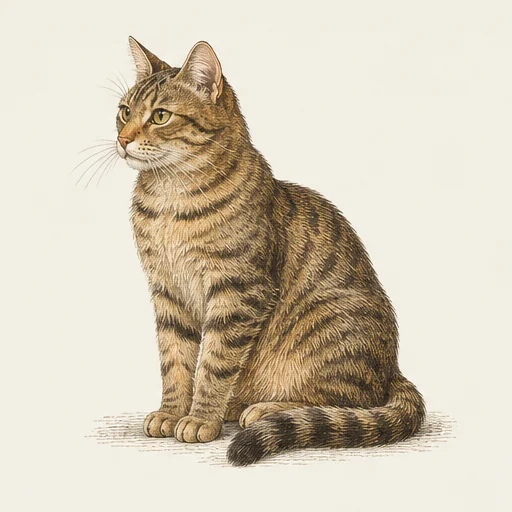
Cat breeds
Filter profiles- AbyssinianThe Abyssinian is a medium-sized, shorthaired cat breed with a ticked coat, developed in Britain since the late 1800s. It is very active and needs little grooming.Medium · 12 to 15 years · High exercise · Low grooming
- American ShorthairThe American Shorthair is a medium to large, muscular cat breed from the United States, descended from working cats brought by early settlers. It has a short, hard coat.Large · 15 to 20 years · Moderate exercise · Low grooming
- Bengal CatThe Bengal is a medium to large, short-coated cat breed with a spotted or marbled coat, developed in the United States from crosses between domestic cats and the Asian leopard cat.Large · 12 to 16 years · High exercise · Low grooming
- BirmanThe Birman is a blue-eyed, semi-longhaired pointed cat breed with four white feet, established in France in the 1920s and also called the Sacred Cat of Burma.Large · 12 to 16 years · Moderate exercise · Low grooming
- British ShorthairThe British Shorthair is a medium to large, stocky cat breed from Great Britain with a round head and a short, dense, crisp coat. Blue is its best-known color.Large · 14 to 18 years · Low exercise · Low grooming
- Burmese CatThe Burmese is a medium-sized, muscular shorthaired cat breed with a satin-like coat, descended from Wong Mau, a cat brought from Burma to the United States in 1930.Medium · 13 to 16 years · High exercise · Low grooming
Show 11 moreShow fewer in Cat breeds
- Devon RexThe Devon Rex is a medium-sized cat breed with a short, wavy coat and very large, low-set ears, descended from a curly-coated kitten born in Devon, England.Medium · 12 to 16 years · High exercise · Low grooming
- Exotic ShorthairThe Exotic Shorthair is a medium to large cat breed developed in the United States as a short-coated Persian. It shares the Persian's build, flat face and inherited health risks.Large · 12 to 15 years · Moderate exercise · Low grooming
- Maine CoonThe Maine Coon is a large, semi-longhaired cat breed from New England in the United States, known for its shaggy all-weather coat and long, flowing tail.Large · 12 to 15 years · High exercise · Moderate grooming
- Norwegian Forest CatThe Norwegian Forest Cat is a large, semi-longhaired cat breed from Norway with a water-repellent double coat. It matures slowly, taking up to five years to reach full size.Large · 14 to 16 years · Moderate exercise · Moderate grooming
- Persian CatThe Persian is a medium to large longhaired cat breed with a round head, short nose and cobby body. Its coat needs daily combing.Large · 12 to 15 years · Low exercise · High grooming
- RagdollThe Ragdoll is a large, blue-eyed, semi-longhaired pointed cat breed developed in Riverside, California, in the 1960s.Large · 11 to 13 years · Moderate exercise · Low grooming
- Russian BlueThe Russian Blue is a medium-sized cat breed with a short, dense blue coat tipped with silver and vivid green eyes, believed to have come from northern Russia.Medium · 12 to 15 years · Moderate exercise · Low grooming
- Scottish FoldThe Scottish Fold is a medium-sized cat breed from Scotland with ears that fold forward. The gene variant that folds the ears also causes a bone and cartilage disorder.Medium · 14 to 16 years · Moderate exercise · Low grooming
- Siamese CatThe Siamese is a medium-sized, short-coated cat breed from Thailand with a pale body, darker colored points and deep blue eyes. It is known for being very vocal.Medium · 11 to 15 years · High exercise · Low grooming
- Siberian CatThe Siberian is a medium to large, semi-longhaired cat breed from Russia with a dense triple coat. The first breeding cats reached the United States in 1990.Large · 12 to 15 years · Moderate exercise · Moderate grooming
- SphynxThe Sphynx is a medium-sized cat breed from Canada that looks hairless because of a recessive gene variant. Its bare, oily skin needs regular cleaning.Medium · 15 to 20 years · High exercise · High grooming
Care guides
- Cat Carrier TrainingA cat can learn to enter a travel carrier, rest behind its closed door and tolerate being lifted through short practice sessions at home.2 min read
- Indoor Cat EnrichmentHiding places, climbing routes, hunting games and simple food puzzles give an indoor cat choices about where to rest, how to play and how to find food.3 min read
Training and behavior
- Introducing CatsA gradual introduction lets unfamiliar cats investigate each other's scent, see one another through a barrier and share space under supervision.2 min read
- Litter Box TrainingLitter box training relies on a cat's preference for loose material to dig in. Most of the work is providing enough large, clean boxes in quiet places.5 min read
- Scratching in CatsScratching is normal behavior that cats use to maintain their claws, stretch and leave marks. It cannot be stopped, but it can be directed to posts and pads.11 min read
- Urine Marking in CatsUrine marking, or spraying, is normal feline scent communication and differs from toileting outside the litter box. Treatment targets its triggers.9 min read
Health
- Chronic Kidney Disease in CatsChronic kidney disease is a gradual, irreversible loss of kidney function that is common in older cats. It cannot be cured, but treatment can slow it.11 min read
- Core Vaccines for CatsCore vaccines are those that veterinary guidelines recommend for every cat. They protect against panleukopenia, herpesvirus, calicivirus, rabies and, in kittens, feline leukemia virus.6 min read
- Feline Immunodeficiency VirusFeline immunodeficiency virus (FIV) is a lifelong infection of cats spread mainly by bites. It can weaken the immune system over years, though many infected cats stay well.10 min read
- Feline Infectious PeritonitisFeline infectious peritonitis (FIP) is a severe disease of cats caused by certain strains of feline coronavirus. Once almost always fatal, it can now often be treated with antiviral drugs.11 min read
- Feline Leukemia VirusFeline leukemia virus (FeLV) is a retrovirus spread between cats by close contact. It can cause immune suppression, anemia and cancer. There is no cure, but a vaccine exists.10 min read
- Feline Lower Urinary Tract DiseaseFeline lower urinary tract disease (FLUTD) is a group of bladder and urethra problems in cats. A cat that cannot pass urine needs emergency care.9 min read
Show 5 moreShow fewer in Health
- Feline PanleukopeniaFeline panleukopenia is a highly contagious, often fatal parvovirus disease of cats that affects kittens most severely. A core vaccine protects against it.11 min read
- Feline Upper Respiratory InfectionFeline upper respiratory infection, or cat flu, is a contagious illness of the nose, eyes and mouth caused mainly by feline herpesvirus and feline calicivirus, sometimes with bacteria.11 min read
- Hyperthyroidism in CatsHyperthyroidism is an overproduction of thyroid hormone, usually from a benign thyroid growth. It is common in older cats and can be treated.10 min read
- Hypertrophic Cardiomyopathy in CatsHypertrophic cardiomyopathy (HCM) is a thickening of the heart muscle and the most common heart disease of cats. Many cats show no signs; others develop heart failure or blood clots.10 min read
- Lily Poisoning in CatsTrue lilies and daylilies cause sudden kidney failure in cats. Every part of the plant is toxic, including the pollen and vase water, and any exposure is an emergency.7 min read
Care and health for cats and dogs
- Acetaminophen PoisoningAcetaminophen (paracetamol) damages red blood cells and the liver in cats and dogs. Cats are especially sensitive, and any ingestion is an emergency.7 min read
- Antifreeze PoisoningAntifreeze poisoning is caused by ethylene glycol, which leads to kidney failure in dogs and cats. Small amounts can kill, and any suspected exposure is an emergency.8 min read
- Body Condition ScoreA body condition score rates how much body fat a dog or cat carries, judged by sight and touch on a 9-point or 5-point scale. Ideal is 4-5 of 9 in dogs and 5 of 9 in cats.6 min read
- FleasFleas are blood-feeding insects that infest dogs and cats. They cause itching and allergic skin disease, carry tapeworm, and can make young animals anemic.5 min read
- GiardiasisGiardiasis is an intestinal infection with the single-celled parasite Giardia. Many infected dogs and cats show no signs; others have soft, fatty, foul-smelling diarrhea.11 min read
- Heartworm DiseaseHeartworm disease is a mosquito-borne infection with the worm Dirofilaria immitis that damages the lungs and heart of dogs, cats and ferrets. Prescription preventives protect against it.6 min read
Show 8 moreShow fewer in Care and health for cats and dogs
- HeatstrokeHeatstroke is a life-threatening rise in body temperature in dogs, cats and other pets. It is an emergency, and veterinary sources advise cooling the animal at once and contacting a veterinarian.11 min read
- MicrochippingA microchip is a rice-sized implant that carries an identification number. It is not a GPS tracker, and it only works if the owner's registry details are kept current.6 min read
- Periodontal DiseasePeriodontal disease is infection and inflammation of the gums and other tissues that hold the teeth in place. It is the most common dental condition of dogs and cats.10 min read
- RabiesRabies is a viral disease of the nervous system that spreads through the saliva of infected mammals and is fatal once signs appear. Vaccination protects dogs, cats and ferrets.6 min read
- Rodenticide PoisoningRat and mouse baits poison pets in different ways depending on the active ingredient. Any ingestion is an emergency, and treatment depends on the active ingredient.10 min read
- RoundwormsRoundworms are intestinal worms of dogs and cats, most common in puppies and kittens. Toxocara eggs passed in feces can also infect people.10 min read
- Spaying and NeuteringSpaying and neutering are surgeries that sterilize dogs and cats by removing the ovaries or testicles. The recommended age depends on species, breed, size and sex.6 min read
- TicksTicks are blood-feeding arachnids that attach to dogs and cats. They can transmit infections such as Lyme disease and, less often, cause paralysis.5 min read
Food safety
Food safety checkerShow 34 moreShow fewer in Food safety
- BroccoliCaution
- CaffeineToxic
- CarrotsSafe
- CheeseCaution
- CherriesCaution
- ChocolateToxic
- CranberriesCaution
- CucumbersSafe
- EggsCaution
- Grapes and RaisinsToxic
- HoneyCaution
- Macadamia NutsCaution
- MangoCaution
- MilkCaution
- MushroomsToxic
- NutsCaution
- Onions and GarlicToxic
- OrangesCaution
- PeachesCaution
- Peanut ButterCaution
- PearsCaution
- PineappleSafe
- PotatoesCaution
- PumpkinSafe
- RaspberriesSafe
- Raw Bread DoughToxic
- Raw MeatCaution
- RiceCaution
- SaltToxic
- StrawberriesSafe
- TomatoesCaution
- WatermelonSafe
- XylitolCaution
- YogurtCaution
Collections
All collections- Long-Haired Cat BreedsCat breeds whose standard describes a long or semi-long coat, with their grooming needs.
- Short-Haired Cat BreedsCat breeds whose standard describes a short coat, with their grooming needs.
- Low-Grooming Cat BreedsCat breeds with a low grooming rating: coat care weekly or less.
- Active Cat BreedsCat breeds that a registry or veterinary source describes as highly active or athletic.
- Cat Breeds by LifespanEvery cat breed on the wiki ordered by the lifespan range its page cites, longest first.